Building a Home on Land in Vermont
Is it worth it to build my home instead of buying? It's a question we've been hearing a lot lately. Considering the limited inventory and intense competition in our market, it makes sense. Clients are asking us what does it realistically take to build a home to their exact specifications.
Well, let’s start with finding a piece of land! Before you speak with an architect you’ll need to sort out financing, town regulations, zoning, permitting, septic and wastewater. Once you’re settled on a piece of land there are quite a few more steps before settling into your new home.
Learn everything you need to know about home construction in Vermont with our blogs on what to know when buying land, things to consider before construction, and the benefits of going green in your new build.
Putting Together Your Team
First things first, you want to assemble your construction team. You should already have a lender, but you will also want to add a general contractor or builder and someone to provide the building plans.
If you want a custom home, find an architect who can take your inspiration and turn it into a reality. If you have a general sense of what you’re looking for, you can often find a drafter to draw plans for you at a reduced rate. Lastly, many builders have stock plans on file that you can customize, saving you the time of finding an architect to do it for you.
With plans in hand, you can get rolling moving earth and preparing your site to build.
Permits and Inspections
Permits and inspections are designed to protect you and future homeowners from faulty craftsmanship. Conduct due diligence and work with your builder to make sure that you have all of your permits in order before breaking ground. With permits come inspections. Make sure your general contractor is familiar with the inspection process and schedules visits by inspectors at the right milestones so that your home passes code.
Demolition, Clearing, and Foundation Work
Unless you’re buying a plot that is part of a subdivision, you’ll need to do a bit of clearing. This entails removing vegetation and debris, grading a driveway, and preparing the site for a foundation. Once cleared crews can lay your foundation. Soil shifts over time, so a strong foundation will help prevent your future home from settling unevenly. Cracked walls and busted pipes are just the start of your headaches caused by an unstable foundation.
Driveway
Don’t forget your driveway. If you’re on a multi-acre parcel and dream of building your home far from the street you’re going to be paying a lot more than you originally thought getting from the road to your front door.
Utility Hookup
Unless you’re living off the grid (more on that later) you are going to need to hook in to your local utilities. For a lot of Vermont this means electricity, but can also include town water and sewer. The first step to getting an electric hookup is to call your electric utility provider and schedule a site visit. Check out this helpful, interactive map to find out which company provides electricity in your area.
For most Vermonters buying land, a well and septic system are how they will manage potable water and wastewater. Septic systems are wastewater management systems that treat used water and return it to the local water table. The Department of Environmental Conservation has a great overview with helpful information for landowners here!
If you find a piece of land in more urbanized areas, you can hook into the municipal water and wastewater distribution systems. You will need to submit an allocation request to your local provider.
Your best place to start is a call to the Department of Environmental Conservation to understand what permits are needed and what options are available to you.
Framing
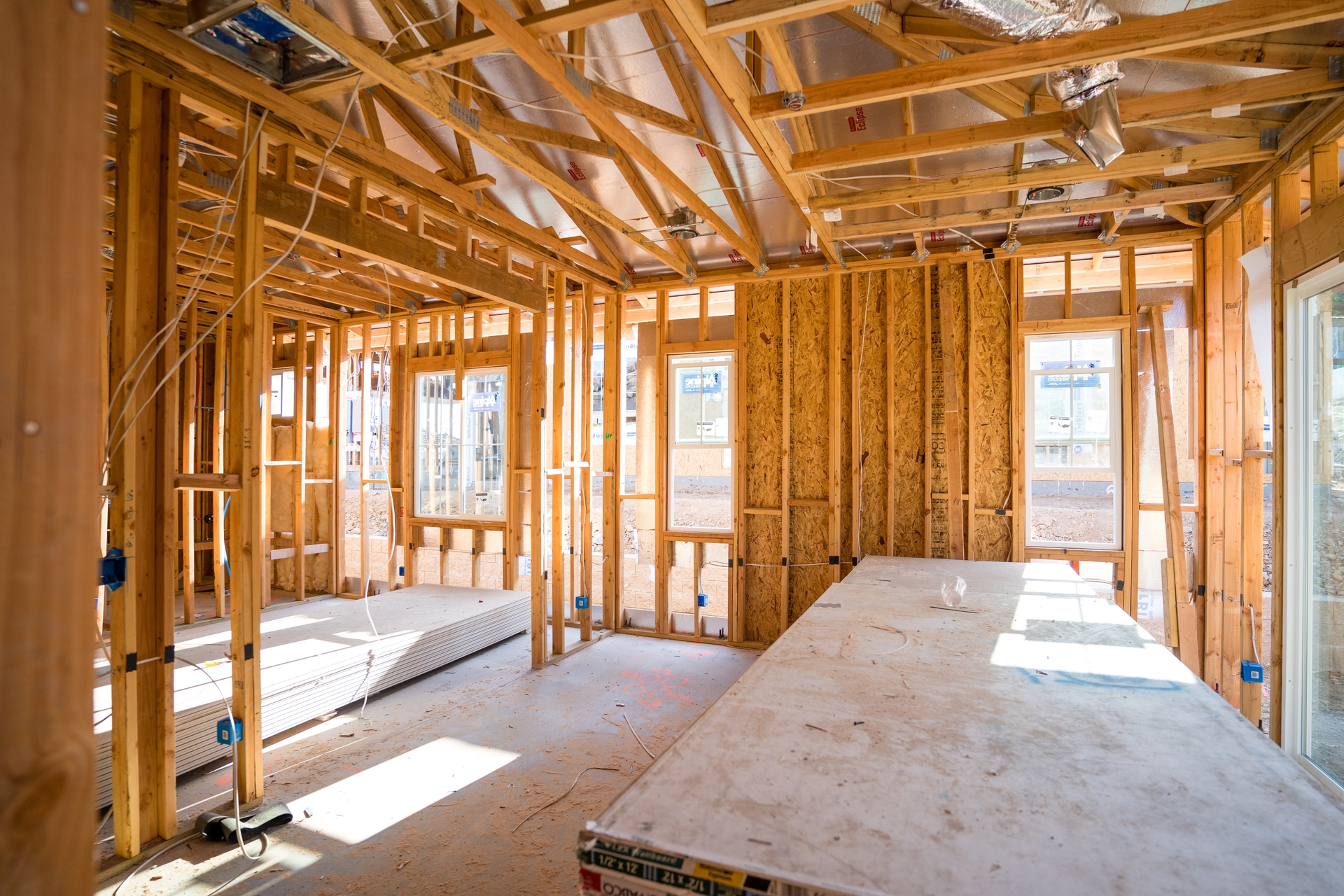
With a cured foundation and utilities on the way your construction team will start framing your house. The framing is the skeleton and shell, holding up your roof and creating your interior space. Once framed your house will be sheathed and wrapped with a vapor barrier, most commonly a Tyvek wrap or Zipsystem, and your roof installed. Windows will go in and doors added. This will allow the interior team to get started.
Exterior
Though your house is weatherproof, you’ll still need to add exterior finishes to your home. Siding whether vinyl, cedar, brick, stone veneer, or any of your other options will be added. Molding and trim are also completed. With most of the construction crews finished tearing up the lawn you can start adding your landscaping touches. Due to the cost of materials, the exterior finishes are going to be a large part of your construction budget.
So How Much Does it Cost to Build A House in Vermont?
It’s best to speak with a general contractor or builder to get an estimate of costs. Just like real estate, the construction marketplace has its ebbs and flows and right now in Vermont there is a huge demand for builders. There have been a record number of new build starts over the last 12 months with no signs of slowing down.
How much should you plan to pay per square foot to build a house in Vermont? We estimate that you should plan for a minimum of $225 per square foot, growing up to $400 per square foot for higher-end finishes. The cost of materials has been impacted by the pandemic and construction companies are booking out months ahead, if not years.
If you don’t own land yet, get started with a Vermont Real Estate Company agent who can help layout your options and weigh the costs of buying a prebuilt home vs. building your own.
What About Building or Buying off the Grid?
We are also getting a lot of questions about living off the grid. Whether you want to build or buy off the grid, what are the things you need to think about before diving in?
Getting Financing for Off-Grid is Challenging
Banks aren’t quick to back off-grid mortgages. The concern? If you default on your payments, the bank has a piece of land that will be hard to sell and recoup their loan. Just like a land loan, an off-grid loan presents a lot of risk for the lender. Some local lenders will provide a ‘Portfolio Loan’ for non-conforming properties that come with stipulations and are often at least one percentage point higher than market interest rates.
VSECU offers an off-grid specific mortgage for people looking to ‘unplug’ with flexible terms and financing up to 70%. Check it out here.
Get A Quote to get on the Grid
Banks and loans offering portfolio loans for off-grid properties might require an estimate of what it would take to put your home on the grid. This is an additional insurance policy meant to reduce risk to the lender in the event you can’t make your payments. A home that’s hooked into the power grid is an easier sell for more traditional buyers.
This also gives you the opportunity to hook into the grid down the road if solar doesn’t work out for you.
Solar Incentives Help
There are federal and state incentives in place to help homeowners install solar on their property. The federal tax credit is equal to 26% of what you paid for your system while the state net metering incentive adds 2 cents per kWh produced on top of the regular retail rate. You can learn more about these incentives from SunCommon here!
Buying or building a home in Vermont comes with plenty of curveballs; no transaction or project is the same.
Get started with an expert from Vermont Real Estate Company for your next real estate transaction.
Categories
Recent Posts



GET MORE INFORMATION