
How We Price Homes in Vermont's Real Estate Market

Pricing your home correctly is critical to our selling strategy at Vermont Real Estate Company. We carefully consider your needs and evaluate the market to achieve your real estate goals. Effectively pricing your home can be the difference between a smooth transaction and a listing that sits on the market too long. Remember, buyers and buyers' agents are also researching market value when viewing homes, so you need to be accurate to attract the right buyers to your property. So, how do we determine the right price for your home?
Key Takeaways:
- The home pricing process starts with your goals. We consider your timeline, needed closing terms, and revenue expectations before moving onto the advantages and disadvantages of your home.
- Location, condition, updates, comps, and competitive advantages are all factors in the listing price of your home.
- Once our research is complete, we strategize with you to determine the best course of action, whether it be listing your home at a higher price, listing it at a lower price, or listing it during a specific season.
Establish Your Real Estate Goals
It starts with your goals. What is your reason and motivation for selling? Are you looking to get the most money out of your sale? What is your timeline for selling? What are the best closing terms? These factors will impact the listing price of your home. If you need to move quickly because of job relocation, we suggest a lower listing price to attract more buyers. Suppose you're looking for maximum dollar and have time on your hands. In that case, we recommend a higher price to eliminate unqualified buyers.
Understanding your goals and motivations ensures your home is priced effectively and sells on your terms.
Once we outline your goals, we start analyzing where your home fits in the market. During our early meetings, we want to learn more about the property, including its history, recent upgrades, and unique features. These details help us identify any competitive advantages and disadvantages that impact the home's value.
So, what do we consider when pricing your home?
Location
Is your home in the rural countryside or a few blocks from downtown? Are there many homes like yours in the neighborhood, or does yours stand alone? Are there any nearby amenities? All the details about your location, from school districts to neighborhood reputation, influence how much a buyer is willing to pay for your home.
Condition and Updates
A home that shines from roof to cellar will always command a higher price than those with aging appliances and dated aesthetics. When we run a comparative market analysis on your home, we note everything, including the hot water heater's age, roof repairs, crown molding, and kitchen appliances. When valuing your home, anything that could cause a buyer to come back with a counteroffer must be considered.
With that in mind, price is set by the market, not by anything you do or we say. Even if you put $80,000 into a new kitchen, you aren’t guaranteed to get a return on that investment if the marketplace for that area doesn’t value the kitchen the same way you do.
Comps
“Comps” is real estate lingo for comparable homes. We run and analyze reports examining what similar homes sold for over the past few months. In hot markets with a lot of closed sales, comps can clarify what a buyer is willing to pay for a house like yours. But often, in Vermont real estate, there are few direct comps. The market is changing rapidly. So, if only two homes in your neighborhood sold last year, they won't accurately reflect what today's buyer is willing to pay. In this case, you must rely on your agent's market expertise and experience to suggest the optimal listing price based on other market factors, including your competitive advantages.
Competitive Advantages
The competitive advantages are the features that set your home apart from other comps. This could be an addition above the garage, a renovated and updated kitchen, or a corner lot. Here are a few competitive advantages we often see in Vermont real estate:
Curb Appeal
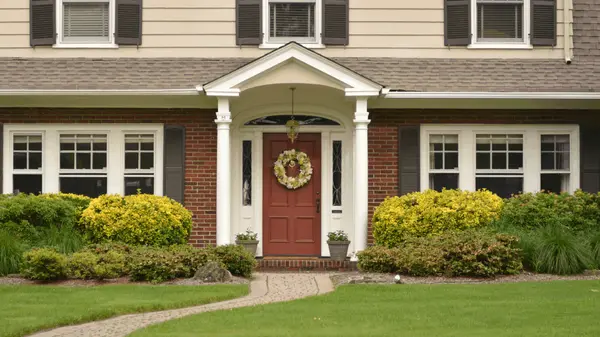
Curb appeal is key when selling a home. A property that looks inviting from the curb, with neat landscaping, fresh exterior paint, and tasteful decorative details, makes a positive first impression on potential buyers. This visual allure can help generate more showings and higher offers.
Upgrades and Renovations
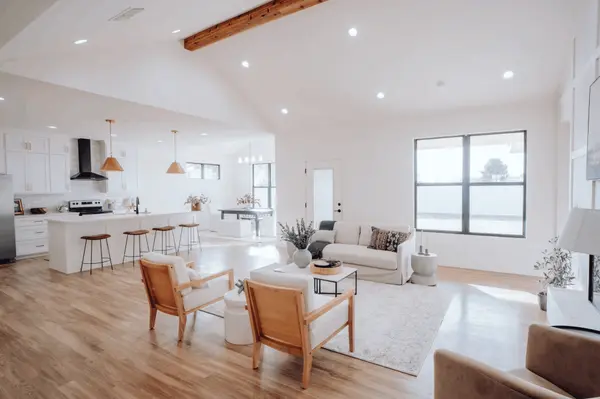
Remodeled kitchens and bathrooms, finished basements, new flooring, and updated hot water heaters justify a higher listing price and appraisal value. Updated homes also tend to sell quickly.
Flexible Timeline
This goes back to those real estate goals we mentioned earlier. Sellers who don't have to move by a specific deadline have more leverage to wait for the best possible offer. They can test the market longer.
Rental Income Opportunity
An in-law suite that could be used as a short- or long-term rental sets homes apart from standard single-family homes. The rental income opportunity that comes with your home should be reflected in the listing price, especially if it sets your home apart from other comparable homes in the market.
Market Demand
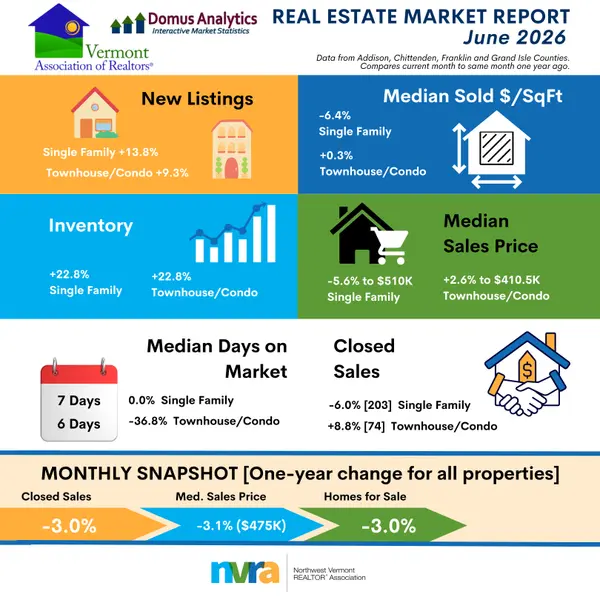
Market demand has a significant impact on the price of your home. The current state of the Vermont real estate market means that listings are moving quickly. That's why pricing homes is more complex than multiplying the square footage of your home by the average price per square foot. When we analyze your home's comps, we put ourselves in a buyer's shoes. We ask, 'If a buyer wants a 4-bed, 3-bath home in your school district with an open floor plan, what are their options?' Suppose there are only 3-bed homes on the local market. In that case, your 4-bed is uniquely positioned to list higher than average per square foot.
Of course, other factors like outdated aesthetics, an old roof, or aging appliances can eliminate this advantage. In this scenario, you must also understand the demand for 4-bedroom homes. That's why speaking with an expert listing agent who knows the market is key to leveraging every advantage available to you.
Strategy
Consider: Listing Above Market Value
Listing above the market value of your home is risky, as it significantly limits the number of potential buyers. When a home is listed above market value, we often recommend planned price reductions after a set number of weeks or a minimum number of showings. Especially in this sellers' market, if a home doesn't receive any offers in the first 2-3 weeks, the price is too much for the market to bear.
Consider: Listing Below Market Value
There are times when it's beneficial to list your home below market value. Listing lower will speed up the sale process, attracting buyers who are ready to jump on a deal. If your property is in need of repair, has quirky features, or is in an inconvenient location, consider below-market pricing to attract more buyers. We consider your real estate goals before we suggest listing your home below market value. This isn't beneficial if you're motivated to maximize your return. If you need to move promptly, sacrificing higher offers might be the best way to sell on your timeline.
Consider: Seasonality
You might hear real estate professionals talk about the spring market and recommend that April, May, and June are the best time to list your home. Yes, the spring-to-summer season sees higher buyer demand, but it isn't always the best time to sell. More than anything, your real estate goals will dictate the best season to sell your home. The winter real estate market will often attract more qualified buyers who are highly motivated to close. Less inventory will also help your home stand out on the MLS. Every month has its reasons on why you should and shouldn't list your home.
–
There's a lot that goes into selling your home. Once you set a listing price, the house needs to be marketed, showings need to be scheduled, offers negotiated, logistics managed, and deals closed. But getting the price right is the critical first step. Our team of expert agents are here to help you understand the market and sell your home to meet your real estate goals.
Reach out today to understand how much your home is worth and what you can expect in today's sellers' market.
Categories
Recent Posts




GET MORE INFORMATION