From the Ground Up: Timeline for Building Your Home
With today’s housing market, many people are considering building their new home. But is it worth it? What does a realistic timeline look like?
We’re breaking down what to expect from the home building process, from pros and cons to unique things about building in Vermont.
Questions to Ask Before Building
To determine whether building is right for you, it’s important to ask yourself a handful of questions, such as:
- Do you want to start the process with the design or the lot?
- Is your credit score high enough to apply for financing?
- What criteria do you have for an architect, real estate agent, and contractors?
- Have you researched the teams you might be working with?
- Have you considered resources like Angi or your local classifieds?
- Have you acquired multiple quotes for your home?
- What are your priorities regarding location? A neighborhood or private acreage?
- Have you walked around the neighborhood you are looking to build in?
- Have you conversed with your builder about additional expenses for septic, internet, electric hook-ups, or a drilled well?
- Are you interested in a custom build or a production build?
Questions like these are just the start of the homebuilding process. It’s important that you make these decisions early to make sure you are getting what you want.
Production Homes vs. Custom Builds
Whether you choose a custom or production build depends solely on how much influence you want to have in the building process. According to the National Association of Home Builders, production builders restrict design to a limited number of preselected home types they have picked and purchased themselves. Custom builders typically build on land owned by the customer and each design is different.
Production builders tend to build more homes in a given year, whereas custom builders spend more time on each individual project.
Even though production builds have more of a cookie-cutter process, there are parts of the process that you can modify. Depending on the builder you choose, you may be able to change the elevation, the type and color of the exterior, and the structure of bonus rooms to support what you intend to do with them (e.g. an extra bedroom versus a home office).
Production homes are often in a development, so you will also have limited choices for lots.
If you choose a custom build, you will have more influence on the entire process, from building your team to what you want the layout of the home to look like. Here are a few things to keep in mind if you would like to do a custom build:
- Obtaining permits and inspections
- Demolition, clearing, and foundation work
- Consider the driveway
- Utility hookup
- Framing
- Exterior
For more information on the specifics of custom builds, read our blog post about building a home on land in Vermont.
Financing
Financing land usually comes with higher interest rates and a larger down payment, most lenders requiring a down payment of 20% or more. This is because when you buy a home, the bank can use the house as collateral in case you don’t go through with the payment. It is more difficult for land that doesn’t have a house as collateral.
Financing is typically easier if you choose a production build. With a production build, you will acquire a traditional mortgage. Traditional mortgages typically have friendlier rates due to less risk to the lender. Contact a mortgage lender to learn more about current rates and what lending options are available to you for a production build. For a custom build, on the other hand, you will obtain a land loan, a construction loan, and then a traditional mortgage for the home once it’s complete.
It can also be difficult to plan when to get your construction loan, since they go for 8-12 months. For more information on financing your build, check out our blog post about things to consider when building in Vermont.
Rough Custom Build Timeline/Steps
According to the US Census, the average new home building process in the northeast takes approximately ten months for developer-built production homes, twelve months for custom, contractor-built homes, and thirteen months for owner-built homes. Supply chain issues are subsiding, so acquiring materials shouldn’t impact your timeline as much as in years past. But builders are still in high demand, so it could be a year or more before a builder is available to start on your home.
A fully custom home can take anywhere from one to three years to build. Furthermore, building in Vermont, because it is in the northeast region, is also likely to take longer due to seasonal weather conditions like frigid temperatures and waterlogged lots.
New Home Source advises that you should allow nine to 12 months for pre-construction, one year for construction, and one month for cleaning and closing. Here are the typical steps for the pre-construction process:
- Assemble the team
- Obtain a site
- Design
- Permits and loan approval
As for construction, there is a bit more to consider:
- Documents
- Site prep
- Foundation
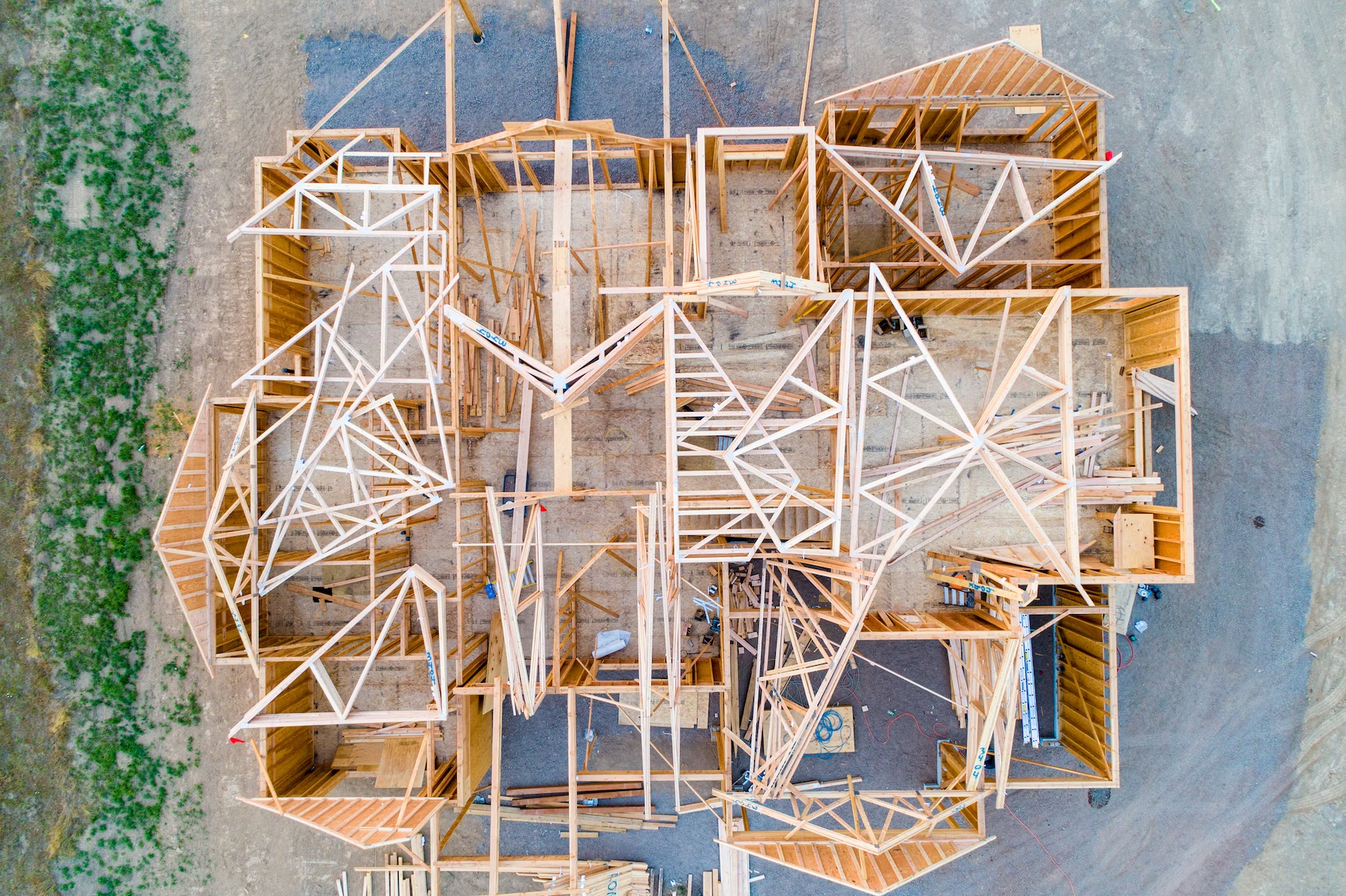
- Rough carpentry
- Install HVAC
- Rough plumbing, electrical, audio/video, security
- Roofing, exterior siding/brick/trim, windows, doors
- Insulation and drywall
- Prime, caulk, paint
- Flooring, cabinets, trim, hardware
This will vary based on your team, location, any necessary changes made throughout the process, etc.
Rough Production Home Timelines
Production home timelines vary widely by development and availability. We see production homes that are near completion and ready for occupancy in mere months and we see homes that are still a year away from completion. Speak with your Vermont Real Estate Company agent who will be able to help you coordinate timelines for currently listed production homes.
Unique Things About Building in Vermont
Building in Vermont can present some challenges. With winter comes issues of snow, ice, and unsafe temperatures for working outdoors. This can lead to delays of some building steps, including:
- Curing the foundation,
- Installing sheetrock,
- Painting,
- Roofing,
- Installing sewer lines.
This also means that finding available subcontractors during the summer is difficult because they are often booked.
Vermont is a diverse state, with city areas like Chittenden County and more rural places like Orleans County and Grand Isle. Generally, builds in more urban and developed areas are likely to finish faster than those in rural areas.
Pros & Cons of Building Your Home
There are bound to be pros and cons whether you decide to build or buy your home. Let’s make a list!
Pros to Building:
- Your home will be custom to your wants and needs.
- You have less competition in terms of bids.
- You are less likely to have surprise maintenance needs.
- You are using newer materials that will last longer.
- Newer homes can be more energy-efficient.
- You can be more specific on your preferred location.
Cons to Building:
- Land loans are harder to attain.
- There can be unexpected costs and delays.
- Building takes more time than buying.
- You have to be more hands-on with the process.
- It is difficult to find land in urban areas.
Be sure to weigh the pros and cons before you decide whether to buy or build and make a decision based on what works best for you.
If you’re thinking about building your home, keep in mind that no two builds are the same. Be sure to do your research, but be aware that your home building process could go differently.
Ready to start looking for land? Begin your search with us today!
Categories
Recent Posts


GET MORE INFORMATION