How to Set Up Your Home Composting System
Over the past five years, the state of Vermont has made a strong effort to enforce composting across the state. In 2020, the Vermont State legislature passed the Universal Recycling Law (Act 148), which required residents and businesses to compost food scraps and yard debris. Homeowners now have the option to create at-home composting systems, bring scraps to compost collection sites, or pay for compost pick-up.
Compost collection sites and pick-ups are a great way to reduce waste with convenience, but there are many benefits to having an at-home compost, including creating free, quality soil for your personal garden and building a more sustainable lifestyle.
Benefits of having a home composting system
Composting reduces the amount of trash you contribute to landfills by about 30 percent; choosing any of the three systems will reduce your overall waste and carbon footprint. In addition to contributing to a more sustainable lifestyle, having an at-home composting system can help reduce fertilizer costs over time. As you build your composting system and continue adding to it, the result will be a naturally nutrient-rich soil to use in your garden. Not only will you save on plant fertilizer, you’ll also see improved plant growth when you use compost material, as opposed to just regular soil.
How to set up your home composting system
Head to your local hardware, garden, or home improvement store to pick up a composting container if you don’t already have materials to build one yourself. Whether you buy your bin or make it from scratch, it should be enclosed and sit on top of a wire-mesh hardware cloth to avoid pests and pets.
Follow these steps to make your own composting bin:
- Start with a strong plastic storage bin that can withstand weather conditions with little damage. Make sure it has a lid—preferably one with a lock to prevent creatures from as small as pests to as large as bears from getting inside.
- Drill aeration holes on the sides and bottom of the container, about two to three inches apart.
- Place the aerated storage pin inside another one to give it proper drainage.
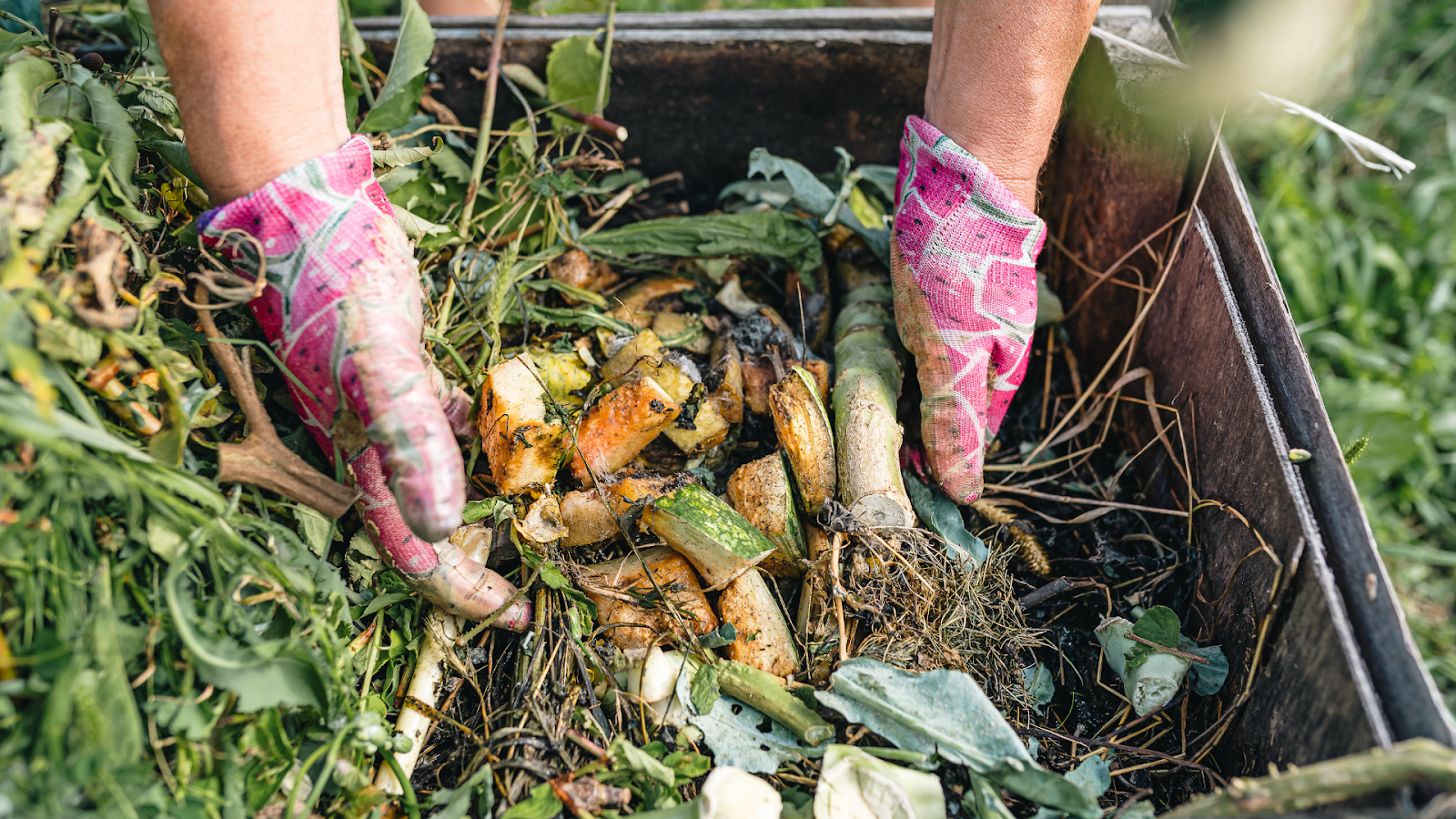
- Start adding your materials. Start with the “brown” materials, like dried leaves or cardboard. Add the “green” materials after, which consists of food scraps and grass. Alternate layers, and keep a ratio of two-parts brown materials to one-part green materials. This will create the appropriate carbon-to-nitrogen ratio so your materials break down properly.
- Regularly add to your compost as needed, adding brown and green materials consistently.
- Use a pitchfork or shovel to turn compost every week or so, allowing air into your composting system and improving breakdown efficiency.
Note: Some solid waste districts and towns offer free composting workshops and discounted composting bins. Learn more here.
If you buy a composting container as opposed to building your own, they often come with a mechanism to easily turn your compost. After a few months with either system, you will notice the contents beginning to look like soil. Make sure to let the compost “cure” for a few months before using it as fertilizer to make sure it has the proper nutrients.
Keeping pets and pests out of your compost
Avoid attracting animals—both wild and domestic—to your compost with these tips:
- Don’t put meat, bones, and grease in your compost. Instead, throw them in your trash or bring them to a nearby composting facility.
- Always cover food scraps with yard debris to cover smells (and keep your ratio intact!)
- Try natural pest deterrents like mint, lavender, cayenne, or garlic powder. Citrus peels can also keep away certain pests.
- Use a tight, secure lid for your compost.
Starting your home composting journey will help you align with Vermont’s environmental goals and put you in better control of your waste. Beyond what’s required by law, you’ll discover that composting becomes a rewarding cycle, where kitchen scraps turn into the most nutritious produce. Take advantage of local resources, and remember that even small steps toward sustainability make a meaningful difference.
Learn more about maintaining your Vermont home. Check out our suite of insightful blogs!
Categories
Recent Posts


GET MORE INFORMATION